
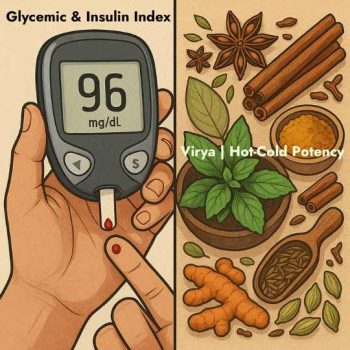
The relationship between food and blood sugar regulation involves complex metabolic processes that extend far beyond simple carbohydrate counting. Understanding both the glycemic index and insulin index provides crucial insights into how different foods affect our metabolic health, while Ayurvedic concepts of virya (potency) offer traditional wisdom about food’s energetic effects on the body.
What is Glycemic Index?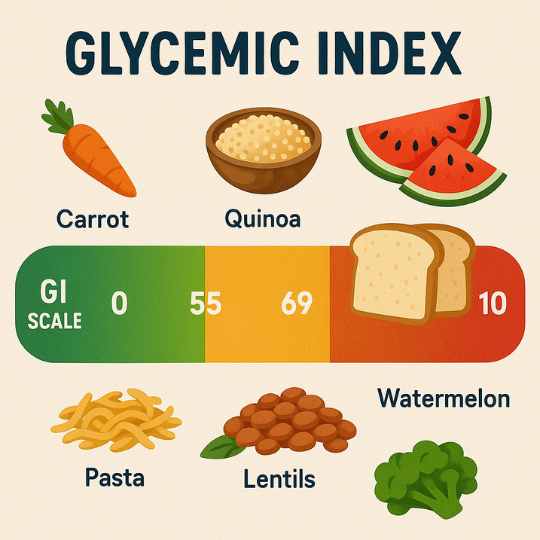
The glycemic index (GI) measures how quickly carbohydrate-containing foods raise blood glucose levels compared to pure glucose (GI = 100). Foods are categorized as:
- Low GI (55 or less): Slow, steady glucose release
- Medium GI (56-69): Moderate glucose response
- High GI (70 or above): Rapid glucose spike
Key Factors Affecting Glycemic Index:
- Food processing and cooking methods
- Fiber content and food structure
- Protein and fat content
- Ripeness (for fruits)
- Individual metabolic factors
Understanding Insulin Index
While glycemic index focuses on blood glucose response, the insulin index (II) measures the insulin response to foods, regardless of their carbohydrate content. The glycemic index insulin index together provide a comprehensive picture because:
- Some high-protein foods (like beef) have low GI but high II
- Certain dairy products trigger significant insulin responses despite moderate GI
- The insulin index better predicts metabolic effects for weight management
Foods with Notable Insulin Responses:
- High II, Low GI: Lean meats, fish, dairy products
- High II, High GI: White bread, potatoes, sugary foods
- Low II, Low GI: Nuts, seeds, leafy greens
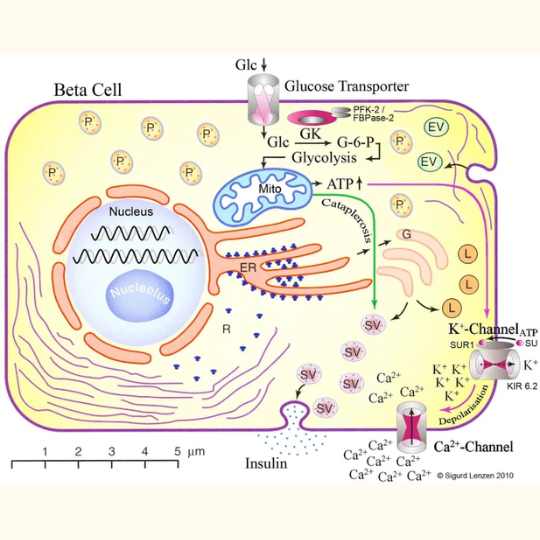
Organs and Systems Involved
Primary Organs in Glucose-Insulin Regulation: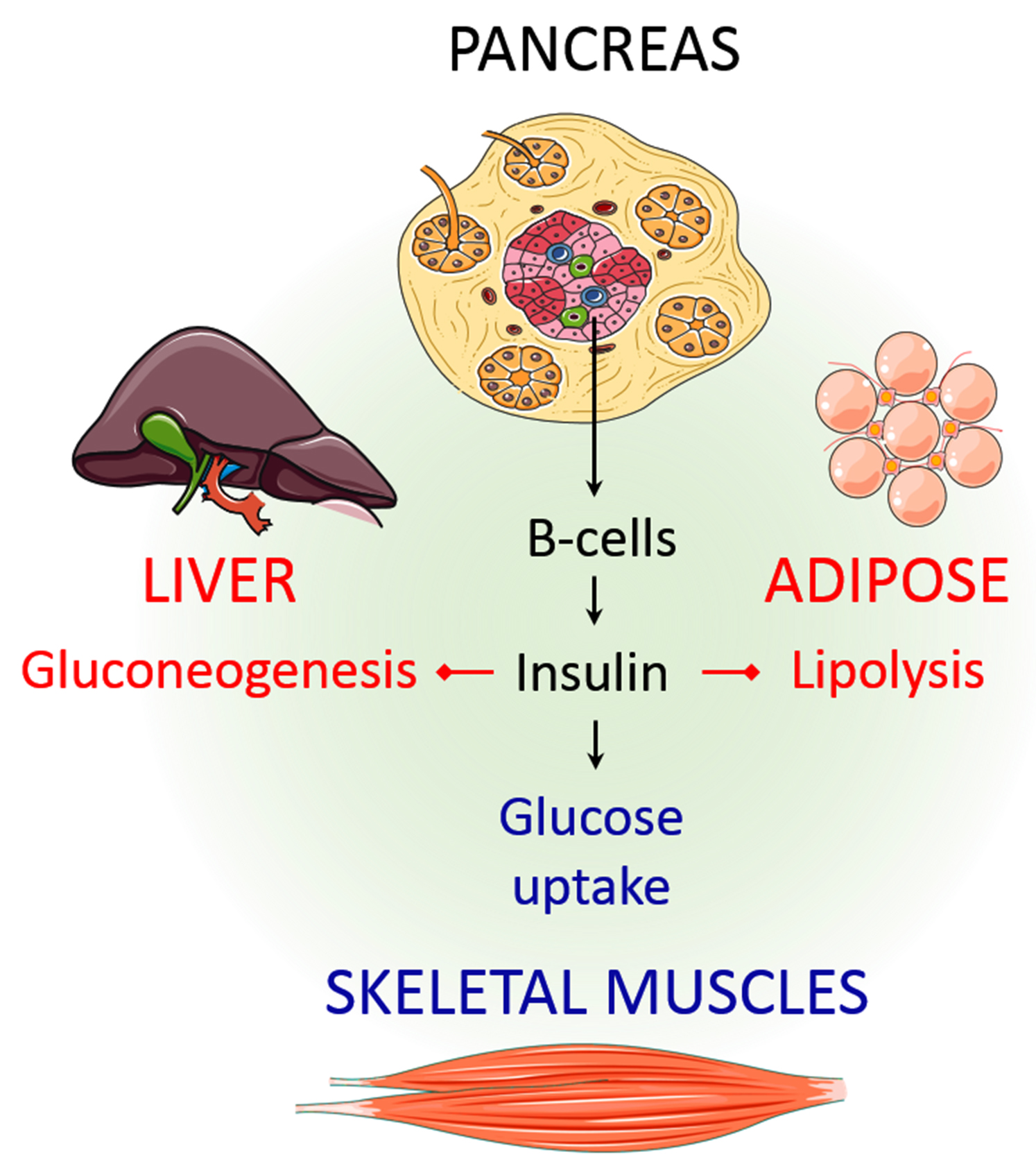
Pancreas: The command center producing insulin (beta cells) and glucagon (alpha cells)
- Insulin promotes glucose uptake by cells
- Glucagon raises blood glucose when levels drop
Liver: The metabolic warehouse
- Stores glucose as glycogen
- Produces glucose during fasting
- Converts excess glucose to fat
Skeletal Muscles: The primary glucose consumers
- Store glucose as muscle glycogen
- Utilize glucose for energy during activity
- Insulin sensitivity varies with muscle mass and activity
Adipose Tissue: The energy storage system
- Stores excess glucose as fat
- Releases stored energy during fasting
- Produces hormones affecting insulin sensitivity
Endocrine System Integration
Key Hormones in Glucose Regulation:
Insulin: The storage hormone
- Promotes cellular glucose uptake
- Stimulates glycogen synthesis
- Inhibits gluconeogenesis
Glucagon: The mobilization hormone
- Stimulates glucose production
- Promotes glycogen breakdown
- Activates gluconeogenesis
Cortisol: The stress hormone
- Increases blood glucose
- Promotes insulin resistance
- Affects long-term metabolic health
Growth Hormone: The development hormone
- Affects glucose metabolism
- Influences insulin sensitivity
- Peaks during sleep
Thyroid Hormones (T3/T4): The metabolic regulators
- Control metabolic rate
- Affect glucose utilization
- Influence insulin sensitivity
Ayurvedic Perspective: Understanding Virya (Potency)
In Ayurveda, virya represents the heating or cooling potency of foods, which affects digestion and metabolism in ways that complement modern understanding of glycemic response.
Hot Potency (Ushna Virya) Foods:
Characteristics: Increase metabolic fire (agni), promote digestion, may increase pitta dosha
Examples:
- Spices: Ginger, black pepper, cinnamon, cloves
- Grains: Buckwheat, millet
- Proteins: Red meat, fish, eggs
- Others: Onions, garlic, mustard seeds
Metabolic Effects: Often correlate with foods that may have moderate to high insulin responses but can improve insulin sensitivity through enhanced digestion and metabolism.
Cool Potency (Shita Virya) Foods:
Characteristics: Cooling effect, slower digestion, may increase kapha dosha
Examples:
- Fruits: Coconut, melon, grapes, sweet fruits
- Vegetables: Cucumber, lettuce, fennel
- Grains: Rice, wheat, barley
- Dairy: Milk, ghee, butter
- Legumes: Mung beans, soybeans
Metabolic Effects: Often align with lower glycemic index foods, providing sustained energy without rapid glucose spikes.
Practical Applications and Recommendations
For Optimal Glucose Control:
- Combine foods strategically: Pair high GI foods with proteins or healthy fats
- Consider timing: Consume higher GI foods around physical activity
- Monitor portions: Even low GI foods can affect blood sugar in large quantities
- Include fiber: Soluble fiber slows glucose absorption
Ayurvedic Integration:
- Balance virya: Combine heating and cooling foods according to individual constitution
- Seasonal eating: Adjust food potency based on climate and season
- Digestive fire: Use warming spices to enhance digestion and nutrient absorption
Clinical Implications and Research
Recent studies have shown that understanding both glycemic and insulin indices, combined with traditional dietary wisdom, can significantly improve metabolic health outcomes. The integration of modern nutritional science with Ayurvedic principles offers a more holistic approach to blood sugar management.
Key Research Findings:
- Insulin index may be more predictive of weight gain than glycemic index alone
- Combining foods with different virya can optimize digestive efficiency
- Individual responses to foods vary significantly based on genetic and constitutional factors
Conclusion
Understanding the glycemic index insulin index provides valuable tools for managing blood sugar and metabolic health. When combined with Ayurvedic concepts of food potency (virya), we gain a more comprehensive understanding of how foods affect our bodies. This integrated approach considers not just the biochemical responses but also the energetic and constitutional effects of food choices.
The key lies in personalization – recognizing that optimal nutrition requires understanding both the scientific metrics and the individual’s unique constitutional needs and responses to different foods.
Relevant Lab Studies:
- Holt, S.H.A., Brand Miller, J.C., & Petocz, P. (1997)
An insulin index of foods: the insulin demand generated by 1000-kJ portions of common foods | American Journal of Clinical Nutrition, 66(5), 1264-1276. - Brand-Miller, J.C., Hayne, S., Petocz, P., & Colagiuri, S. (2003) – “Low-glycemic index diets in the management of diabetes: a meta-analysis of randomized controlled trials” – Diabetes Care, 26(8), 2261-2267.
- Glycemic response and health–a systematic review and meta-analysis: relations between dietary glycemic properties and health outcomes
- Atkinson, F.S., Foster-Powell, K., & Brand-Miller, J.C. (2008)
International tables of glycemic index and glycemic load values: 2008
Note: Studies specifically combining Ayurvedic principles with glycemic research are limited in peer-reviewed literature. The above studies represent the foundational research on glycemic and insulin indices that can be integrated with traditional dietary approaches.