Intro:
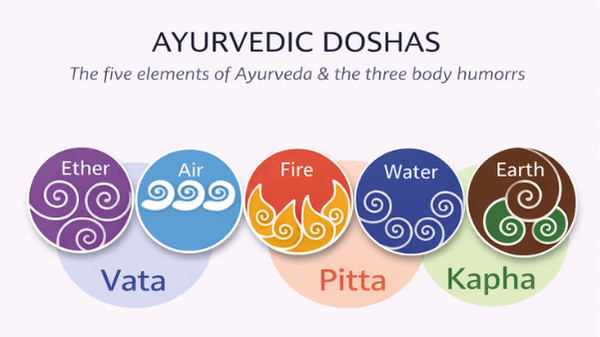
Ayurveda, the ancient Indian system of medicine, emphasizes the importance of maintaining a balance among the three doshas—Vata, Pitta, and Kapha (VPK). These doshas represent unique combinations of the five great elements (Pancha Mahabhutas) and govern all biological, psychological, and physiological functions in the body.
The human body is the result of the combination of the five elements (ether, air, fire, water and earth). Correlation of Panch-tattvas then form the three body humors Vata, Pitta & Kapha.
Vata, Pitta & Kapha (VPK), the three body humors
Choosing ‘soil’ as a ‘metaphor’, vata, pitta, kapha could be denoted as ‘magnetism’, ‘kinetic energy’, and ‘humidity’ of its molecules.
Vata (Air + Ether):
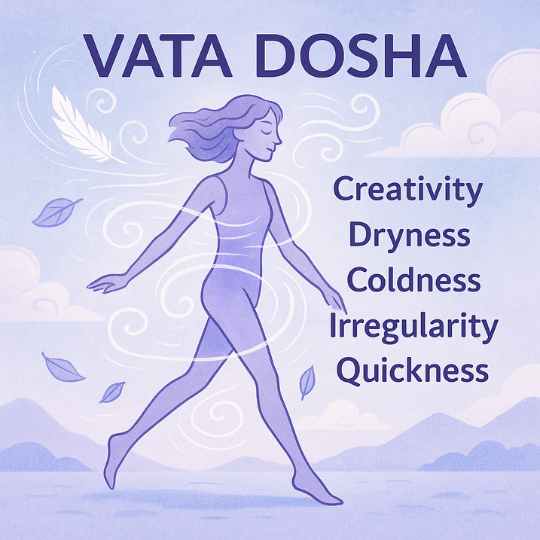
Vata, the nerve force, involves the sensory and the motor function (including any and all types of electro-motor and molecular forces).
Governs all movement (breathing, circulation, nerve impulses, speech, blinking.
Qualities: dry, light, cold, rough, subtle, mobile
Balanced Vata: Creativity, agility, enthusiasm
Imbalanced Vata: Anxiety, dry skin, gas, constipation, restlessness
Aggravated by
Excess Sex, running, wrestling, fasting, sitting under fan/AC, excess walking, excess of pungent, astringent, bitter or light articles, especially with cold potency, fasting, irregular meals, overeating, suppression of semen, urine, stool, sneezing.
Body Vata usually gets aggravated on cold, cloudy and windy days, winters and rainy season, in the morning and evening hours (0200-0600 AM & PM).
Pitta (Fire + Water):
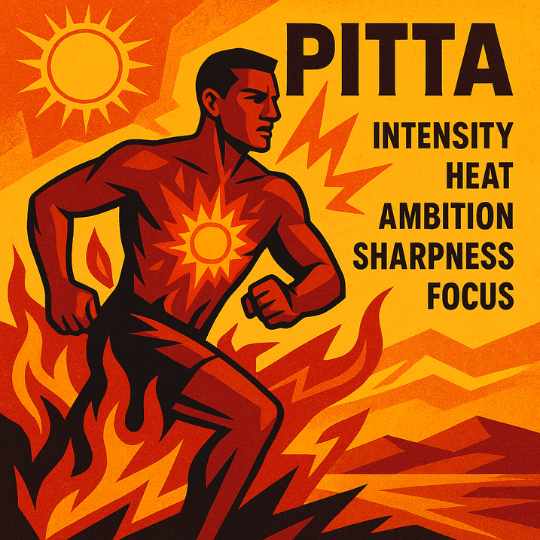
Pitta (loosely may be called body metabolism as per western physiology) metamorphosizes the chyle through a series of bio-organic reactions in the body and forms a protoplasmic substance in the body, sperm in men and ovum in women. Pitta may be assumed to include ‘bile’ and ‘body metabolism’, which produces the body heat.
Controls digestion, metabolism, body temperature, perception, intelligence
Qualities: hot, sharp, light, oily, intense
Balanced Pitta: Courage, clarity, digestion
Imbalanced Pitta: Anger, ulcers, acidity, inflammation, judgmental nature
Aggravated by
Anger, grief, stress, fear, fatigue, fasting, deficient gastric secretions (digestion), unnatural indulgence, consuming excess of pungent, sour and saline taste, light substances, or the one whose Vipaka is Sour.
Aggravating eatables would include curd, whey, wine, sour fruits, excessive exposure to sun, spicy foods etc.
Naturally aggravates in Summers, Autumn, Noon, Mid-Night, during process of digestion, taking warm-hot substances.
Kapha (Water + Earth):

‘The rasa or lymph chyle, formed from ingested food, prevents internal bodily fire from eating up the vital components of the body, by coursing freely all through the organism. This rasa, on undergoing bio-chemical reactions, forms ‘prashadabhuta (useful products’ and ‘malabhuta (non-useful products – waste products’.
Kapha or sleshma, is that component of the rasa, which fills all the intercellular spaces of the body and holds them together, in a cooling embrace.
The Lymph Chyle formed from the digested food, which courses through the whole body, contains elements which build the different body tissues. Due Body Metabolism – Metabolic Heat, it progressively gets transformed into Plasma, Blood, Flesh, Muscle, Bone, Marrow, Semen and Ojas.
The disease in the body is caused by diminution or excess of the respective Doshas in the body.
Ojas – Dhatu:
It is present in the Reproductive Energy that lies latent in the every Body Tissue, and in the Male and Female Reproductive Elements. Health and Strength lies latent in Ojas, in the same way as Butter lies Latent in Milk. Ojas, The Fats and Sugars (Glycogen), form the nutritive basis of the procreative Elements, and hence may be said, Pure Desi Cow Milk and Pure Desi Cow Ghee must definitely form a good portion of our daily diet.
-
Provides structure, stability, lubrication, memory retention, immunity
-
Qualities: heavy, slow, steady, cold, oily, dense, soft
-
Balanced Kapha: Compassion, stability, strength
-
Imbalanced Kapha: Lethargy, weight gain, congestion, possessiveness
Aggravated by sleeping in daytime, sedentary lifestyle, consuming heavy, slimy, sweet, sour or saline taste.
Curd, milk, consuming aquatic foods-flesh, eating wholesome and unwholesome substances at the same time. The cold food and/or drinks also aggravate Kapha.
Naturally is aggravated in Springs, Pre-winter, in the morning and evening, and just after meals,
To achieve health and longevity, Ayurveda teaches us to understand the influence of:
-
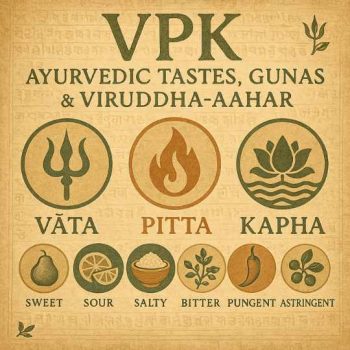
Shad Rasa (Six Tastes)
-
Gunas (20 Qualities)
-
Virya (Potency/thermal effect)
-
Vipaka (Post-digestive effect)
-
Viruddha Ahara (Incompatible food combinations)
The Six Tastes (Shad Rasa) and Their Dosha Impact
Each taste (Rasa) influences the doshas differently. A meal ideally includes all six to balance the body.
| Taste | Elements | Effects on Doshas |
|---|---|---|
| Sweet | Earth + Water | Balances Vata & Pitta, Increases Kapha |
| Sour | Earth + Fire | Balances Vata, Increases Pitta & Kapha |
| Salty | Water + Fire | Balances Vata, Increases Pitta & Kapha |
| Pungent | Fire + Air | Balances Kapha, Increases Vata & Pitta |
| Bitter | Air + Ether | Balances Pitta & Kapha, Increases Vata |
| Astringent | Air + Earth | Balances Pitta & Kapha, Increases Vata |
The 20 Gunas (Qualities
- Heavy (Guru) / Light (Laghu)
Heavy (Guru): Increases Kapha, balances Vata and Pitta. Found in dairy, nuts, bananas, meats. Grounds the body but may cause sluggishness.
Light (Laghu): Reduces Kapha, may increase Vata. Found in leafy greens, millets, puffed rice. Aids digestion and mental clarity. - Slow (Manda) / Sharp (Tikshna)
Slow (Manda): Calms Vata and Pitta, aggravates Kapha. Found in cooling herbs like sandalwood, or foods like milk. Encourages stability but can reduce alertness.
Sharp (Tikshna): Stimulates digestion and metabolism. Increases Pitta, reduces Kapha. Found in chili, garlic, onions. Too much can cause inflammation. - Cold (Shita) / Hot (Ushna)
Cold (Shita): Soothes Pitta, may disturb Vata and Kapha. Found in cucumbers, coconut water, dairy. Cooling and calming.
Hot (Ushna): Reduces Kapha and Vata, increases Pitta. Found in ginger, black pepper, fermented foods. Boosts circulation and digestion. - Oily (Snigdha) / Dry (Ruksha)
Oily (Snigdha): Pacifies Vata, aggravates Kapha. Found in ghee, avocado, sesame oil. Nourishing and lubricating.
Dry (Ruksha): Balances Kapha, increases Vata. Found in crackers, legumes, popcorn. Promotes lightness but may lead to dryness. - Smooth (Shlakshna) / Rough (Khara)
Smooth (Shlakshna): Calms Vata, may increase Kapha. Found in well-cooked foods, bananas, oils. Soothing and slippery in nature.
Rough (Khara): Balances Kapha, aggravates Vata. Found in raw vegetables, bran, dry snacks. Promotes detox but can be irritating for Vata. - Dense (Sandra) / Liquid (Drava)
Dense (Sandra): Increases Kapha, grounds Vata. Found in cheese, yogurt, sweet root vegetables. Builds tissues but may clog channels.
Liquid (Drava): Balances Vata dryness, may aggravate Kapha. Found in soups, milk, juicy fruits. Hydrating and flow-inducing. - Soft (Mridu) / Hard (Kathina)
Soft (Mridu): Soothes Vata and Pitta, increases Kapha. Found in marshmallow root, cooked rice, dairy. Relaxing and gentle.
Hard (Kathina): Balances Kapha, aggravates Vata. Found in dry granola, raw carrots, hard candies. Stimulating and tough to digest. - Stable (Sthira) / Mobile (Chala)
Stable (Sthira): Grounds Vata, may increase Kapha. Found in root vegetables, cooked grains, routines. Promotes calm and focus.
Mobile (Chala): Stimulates movement and circulation. Balances Kapha, may aggravate Vata. Found in spicy food, caffeine, travel. - Subtle (Sukshma) / Gross (Sthula)
Subtle (Sukshma): Affects the mind and nervous system. Increases Vata, balances Kapha. Found in sattvic herbs, meditation, mantra. Enhances clarity and intuition.
Gross (Sthula): Supports body tissues and structure. Increases Kapha, grounds Vata. Found in dense foods like grains and meat. Builds strength but can cause heaviness. - Clear (Vishada) / Cloudy (Picchila)
Clear (Vishada): Enhances mental clarity and digestion. Balances Kapha. Found in herbal teas, fasting, minimalism. Uplifts and purifies.
Cloudy (Picchila): Increases Kapha, may disturb Pitta. Found in yogurt, cheese, excess mucus-forming foods. Promotes cohesion but can lead to dullness.
These gunas act as subtle influencers on the body and mind. Using them wisely in your daily choices—foods, routines, environments—helps maintain doshic harmony and holistic wellness.
These pairs of opposing attributes that affect the doshas and influence body-mind constitution.
These gunas are inherent in food, environment, and emotions. Bringing opposite gunas into our lifestyle helps restore balance.
Virya – Potency (Immediate Thermal Effect)
Virya refers to the heating or cooling effect of a substance during digestion, influencing how it affects the body.
Ushna (Hot Potency):
Increases Pitta, decreases Vata & Kapha
Examples: Ginger, garlic, mustard, chiliShita (Cold Potency):
Decreases Pitta, may aggravate Vata & Kapha
Examples: Coconut, cucumber, dairy, mint
Vipaka – Post-Digestive Effect
Vipaka is the final effect of food after complete digestion, which influences the doshas and dhatus (tissues).
Madhura Vipaka (Sweet):
Builds tissues, promotes fertility
Increases Kapha
Examples: Rice, milk, sweet fruitsAmla Vipaka (Sour):
Stimulates bile, improves digestion
Increases Pitta
Examples: Citrus, picklesKatu Vipaka (Pungent):
Dries tissues, reduces fat
Increases Vata
Examples: Pepper, mustard
Viruddha Ahara – Incompatible Food Combinations
Viruddha Ahara refers to the mixing of certain foods that may disturb digestion, produce toxins (Ama), or create long-term imbalances.
Common Examples of Viruddha Ahara:
-
Milk + Citrus Fruits
Acidic fruits like orange, lemon, or pineapple can curdle milk in the stomach. This may lead to bloating, indigestion, and heaviness. The clash of bitter-sweet & sour qualities can also disturb Kapha and Pitta. -
Fish + Dairy
Fish is heating while milk is cooling. Combining them may disrupt digestive fire (Agni) and lead to skin disorders, rashes, or allergic reactions. Ayurveda advises avoiding this energetically opposite pairing. -
Equal Parts Honey + Ghee
When mixed in equal proportions by weight, this combination becomes toxic. It may hinder metabolism, block channels (srotas), and increase ama (toxins) in the body. Especially when healing or cooking, even though honey is neutral, heating it vitiates it’s pitta properties as it is made of flower’s nectar – flower’s pitta.
Honey, when heated or cooked, loses its beneficial properties and becomes toxic. According to classical Ayurvedic texts like Charaka Samhita, heated honey becomes difficult to digest and produces ama. -
Ice Cream After Hot Meals
Eating cold ice cream immediately after a hot meal can shock the digestive system. It weakens Agni (digestive fire), leading to poor digestion, gas, and toxic buildup.
Why avoid Viruddha Ahara?
-
Leads to Ama (toxins) formation
-
Can disturb Agni (digestive fire)
-
Triggers skin issues, indigestion, allergies, low immunity
Ayurvedic Daily Clock (Dosha Time Zones)
Our internal rhythm changes as per dosha dominance throughout the day:
| Time Range | Dominant Dosha | Elements |
|---|---|---|
| 2 AM – 6 AM | Vata | Ether + Air |
| 6 AM – 10 AM | Kapha | Water + Earth |
| 10 AM – 2 PM | Pitta | Fire + Water |
| 2 PM – 6 PM | Vata | Ether + Air |
| 6 PM – 10 PM | Kapha | Water + Earth |
| 10 PM – 2 AM | Pitta | Fire + Water |
-
Vata Times (2–6 AM & 2–6 PM)
Ideal for meditation, creativity, reflection -
Kapha Times (6–10 AM & 6–10 PM)
Best for physical work, grounding, rest -
Pitta Times (10–2 PM/AM)
Optimal for digestion, problem-solving, deeper sleep
References (few):
-
Sushruta Samhita (1894 Ed.)
-
Charaka Samhita
-
Dravyaguna Vijnana – Ayurveda Pharmacology
- Viruddha Ahara: A critical view
Recommended Affiliate Products
Affiliate Disclosure: This post contains affiliate links. If you purchase through these links, we may earn a small commission at no extra cost to you.